

IS THIS YOUR PROFILE?
This is a Free profile. Go GOLD!Your Gold profile will show on the following pages: GOLD package & pricing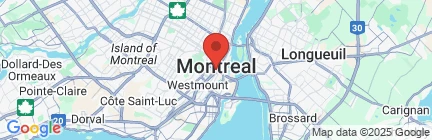
James Reza Nazem | رضا ناظم

 Loading...
Maximum 1 rating per user
Montreal
Quebec
H3N 2B2
Canada
James Reza Nazem | رضا ناظم
Class Action in Quebec
In Quebec, class action (action collective in French) is a means enabling a group, also called a class, to institute a lawsuit.
The particularity of class action is that a person can sue in the name of other members of the class.
Once the authorization is granted by the court, all members of the class are automatically included and the suit continues its course like any other suit.
A member may however exclude himself, if he desires so. This is an opting out system.
No registration is necessary for a member to benefit from a positive outcome of the class action. Only the representative’s name is mentioned in the judicial proceedings!
It is only in the event of a victory that the members may show up and benefit from the proceeds of the suit.
This is the advantage of class actions. Members profit from the representative’s effort who institutes proceedings in the name of the class. The members are free riders.
Class action is a procedure that aims at obtaining justice for the members. The representative benefits from the suit in the same way as the members of the class; not more. Therefore, he does not receive any compensation for acting as representative.
The authorization
Before a person can launch a class action in the name of the class, he has to request the court’s authorization in order to become the class representative.
It is the authorization or certification stage. At this stage, this person has to expose the suit that he proposes to present in the name of the class. To decide whether the authorization should be granted, the court will apply four (4) criteria:
1. Do the claims of the members raise identical, similar or related issues?
In other words, can one find any homogeneity in the members’ situations?
For example: all the purchasers of the same deficient product manufactured in mass by the same manufacturer have a strong chance of convincing the court of the identity, similarity or relation of their claims for reparation costs.
2. Do the facts described in the suit appear to justify the conclusions sought?
The court verifies mostly whether the suit appears to have a chance to succeed.
If the proposed suit is clearly ill-founded, the court will refuse to authorize the class action.
3. Whether the composition of the class makes easy a joint legal suit?
If a joint legal suit is possible, the authorization will not be granted.
4. Is the proposed class representative in a position to properly represent the class?
It is not necessary to seek the perfect representative, but rather the average reasonable person who will assume the responsibility of representing the class honestly.
According to the Supreme Court of Canada, no one should be excluded unless his interest or competence is such that the case could not possibly proceed fairly.
The consequences of a judgment
Once the authorization is granted, a suit is launched by the representative in the name of the class that the court has determined.
One or many notices are published in order to advise the members of the class action. All the members of the class determined by the court are automatically included.
If a member wishes to be excluded, that member will have to advise the court in writing within the prescribed delays.
A few examples
A class action can involve any field. Here are a few examples:
Environment:
In 1994, the Superior court authorized a class action in the name of the neighbouring residents against a cement manufacturer for the environmental incidents of its activities.
Health:
In 2005, the Superior court authorized a class action against the sellers of cigarettes in the name of all persons who suffered from lung, larynx or throat cancer or emphysema.
Product quality:
In 2010, the Superior court authorized a class action against a car manufacturer in the name of lessees and owners of a car model for a manufacturing defect.
Privacy:
In 2010, the Superior court authorized a class action against an important smart phone manufacturer for data collection without consent.
Competition:
In 2013, the Supreme Court of Canada authorized a class action against the manufacturers of microchips in the name of consumers on the basis of allegations of conspiracy in order to fix prices of dynamic random-access memory chips.
Labour:
In 2014, the Supreme Court of Canada authorized a class action against the employer in the name of employees subsequent to a unilateral modification of the health insurance regime for retirees and their spouses.
False representations:
In 2014, the Court of Appeal authorized a class action in the name of purchasers of furniture for false representations.
Publicity:
In 2014, the Court of Appeal authorized a class action against an airline in the name of travellers for the reimbursement of a fragmented price on an internet site.
James Reza Nazem | رضا ناظم
